Advancing Molecular Health


About Apex Research
Apex was established to advance molecular research through technical rigor, analytical precision, and uncompromising quality standards.
We specialize in the development and supply of high-purity compounds intended strictly for research applications. All materials are produced and handled under controlled conditions aligned with international quality assurance protocols.
Each batch undergoes systematic analytical evaluation, including identity confirmation and purity assessment through High-Performance Liquid Chromatography (HPLC) and Liquid Chromatography–Mass Spectrometry (LC-MS). These analytical procedures ensure molecular integrity, defined purity specifications, and batch-to-batch consistency.
Our operational framework emphasizes full traceability, controlled sourcing, and documented quality control procedures. Manufacturing partners are selected based on technical qualification standards, and materials are released only after meeting predefined analytical specifications.
Scientific integrity is central to Apex. We are committed to supporting the evolving demands of molecular research by delivering materials that meet strict performance criteria within controlled research environments.
Precision. Verification. Reliability.
AOD-9604
AOD-9604 is a synthetic peptide derived from the C-terminal fragment (176–191) of human growth hormone. It has been studied for its selective activity in adipose tissue metabolism, particularly its potential role in promoting lipolysis and modulating lipid accumulation mechanisms.
This compound is primarily utilized in research settings focused on metabolic regulation and adipose tissue physiology.

CJC-1259
CJC-1259 is a synthetic peptide analog of growth hormone–releasing hormone (GHRH) designed to stimulate endogenous growth hormone secretion through prolonged receptor activation. It has been investigated in research settings for its potential role in modulating the somatotropic axis and influencing downstream physiological processes associated with growth hormone signaling.
Studies focus on its extended half-life characteristics and sustained interaction with GHRH receptors. CJC-1259 is utilized primarily within controlled research environments examining endocrine regulation and metabolic physiology.

GHK-Cu
GHK-Cu (Copper Tripeptide-1) is a naturally occurring copper-binding tripeptide composed of glycine, histidine, and lysine. It has been studied in research contexts for its role in cellular signaling, tissue remodeling, and regenerative biological pathways.
Preclinical and experimental investigations focus on its involvement in collagen synthesis modulation, extracellular matrix regulation, and cellular repair mechanisms. GHK-Cu is primarily utilized within controlled research environments exploring dermatological, connective tissue, and molecular signaling processes.

KPV
KPV (Lys-Pro-Val) is a synthetic tripeptide derived from the C-terminal sequence of alpha-melanocyte–stimulating hormone (α-MSH). It has been investigated in research settings for its potential role in modulating inflammatory pathways and immune signaling mechanisms.
Preclinical studies focus on its interaction with cytokine regulation and cellular inflammatory responses. KPV is primarily utilized within controlled research environments exploring immunological processes, barrier function, and molecular inflammation pathways.

Retatrutide
Retatrutide is a synthetic multi-receptor peptide agonist investigated for its activity on GLP-1, GIP, and glucagon receptors. It has been studied in research and clinical contexts for its role in metabolic regulation, energy balance, and glucose homeostasis pathways.
Current investigations focus on its receptor-mediated signaling mechanisms and downstream effects on appetite modulation, body weight regulation, and metabolic function. Retatrutide is primarily utilized within controlled research environments examining endocrine and metabolic physiology.

SS31
SS-31 (Elamipretide) is a mitochondria-targeted tetrapeptide investigated for its interaction with cardiolipin and its role in supporting mitochondrial membrane integrity. It has been studied in research settings for its potential involvement in cellular bioenergetics, oxidative stress modulation, and mitochondrial stabilization mechanisms.
Current investigations focus on its capacity to influence mitochondrial function and energy production pathways. SS-31 is primarily utilized within controlled research environments examining mitochondrial physiology and metabolic regulation.

Tesamorelin
Tesamorelin is a synthetic analog of growth hormone–releasing hormone (GHRH) designed to stimulate endogenous growth hormone secretion through selective receptor activation. It has been investigated in research and clinical settings for its role in modulating the somatotropic axis and associated metabolic pathways.
Current studies focus on its effects on growth hormone dynamics, lipid metabolism, and endocrine regulation mechanisms. Tesamorelin is primarily utilized within controlled research environments examining hormonal signaling and metabolic physiology.

BPC-157
BPC-157 is a synthetic peptide derived from a naturally occurring gastric protein fragment. It has been investigated in preclinical research for its potential role in tissue repair, angiogenesis modulation, and cytoprotective mechanisms.
Current studies focus on its interaction with signaling pathways involved in inflammatory response and regenerative processes. BPC-157 is primarily utilized within controlled research environments exploring gastrointestinal and connective tissue physiology.

CAGRILINTIDE
Cagrilintide is a long-acting amylin analog developed to modulate appetite regulation and energy balance pathways. It has been investigated in clinical and research settings for its interaction with amylin receptors involved in satiety signaling and metabolic control.
Current studies focus on its effects on gastric emptying dynamics, food intake modulation, and neuroendocrine mechanisms associated with body weight regulation. Cagrilintide is primarily utilized within controlled research environments examining metabolic and appetite-related pathways.

Ipamorelin
Ipamorelin is a synthetic pentapeptide classified as a selective growth hormone secretagogue. It has been investigated in research settings for its ability to stimulate endogenous growth hormone release through interaction with ghrelin (GHS-R1a) receptors.
Studies focus on its receptor selectivity and its role in modulating the somatotropic axis without significantly influencing other pituitary hormones. Ipamorelin is primarily utilized within controlled research environments examining endocrine regulation, growth hormone signaling, and metabolic physiology.

MOTS-C
MOTS-c is a mitochondria-derived peptide (MDP) encoded within mitochondrial DNA and studied for its role in cellular metabolic regulation. It has been investigated in research settings for its involvement in energy homeostasis, insulin sensitivity pathways, and stress-response signaling mechanisms.
Current studies focus on its interaction with metabolic adaptation processes and its potential influence on mitochondrial function and cellular resilience. MOTS-c is primarily utilized within controlled research environments examining metabolic physiology and molecular bioenergetics.

SLU-PP-332
SLU-PP-332 is a synthetic small-molecule compound investigated for its activity as an estrogen-related receptor (ERR) agonist. It has been studied in preclinical research for its potential role in regulating mitochondrial function, oxidative metabolism, and cellular energy expenditure pathways.
Current investigations focus on its interaction with nuclear receptor signaling mechanisms associated with metabolic adaptation and bioenergetic regulation. SLU-PP-332 is primarily utilized within controlled research environments examining molecular metabolism and transcriptional regulation processes.

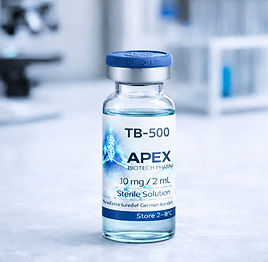
TB-500
TB-500 is a synthetic peptide corresponding to a fragment of thymosin beta-4, a naturally occurring protein involved in cellular migration and tissue remodeling processes. It has been investigated in research settings for its potential role in cytoskeletal regulation, angiogenesis modulation, and regenerative signaling pathways.
Current studies focus on its influence on cellular repair mechanisms and connective tissue dynamics. TB-500 is primarily utilized within controlled research environments examining tissue regeneration and molecular repair processes.